
There are two main types of SWM ponds:
- Wet ponds always have water, like a small lake, and help remove pollutants before water leaves the pond.
- Dry ponds are usually empty and only fill after heavy rain, slowly releasing water to prevent flooding.
Stormwater ponds help protect Kingston from flooding, clean our water and support the environment. We own and maintain more than 40 wet and dry ponds, and more ponds are added as the city grows. Keeping these ponds in good condition helps keep our community and nearby natural areas safe.
Learn how we take care of stormwater ponds and our plans to keep them safe and working properly.
If you have a question or notice an issue at a nearby pond, sign up/log in to MyKingston to submit a service request or email the Stormwater Team in Engineering Services at engineering@cityofkingston.ca.
We aim to respond within two business days.
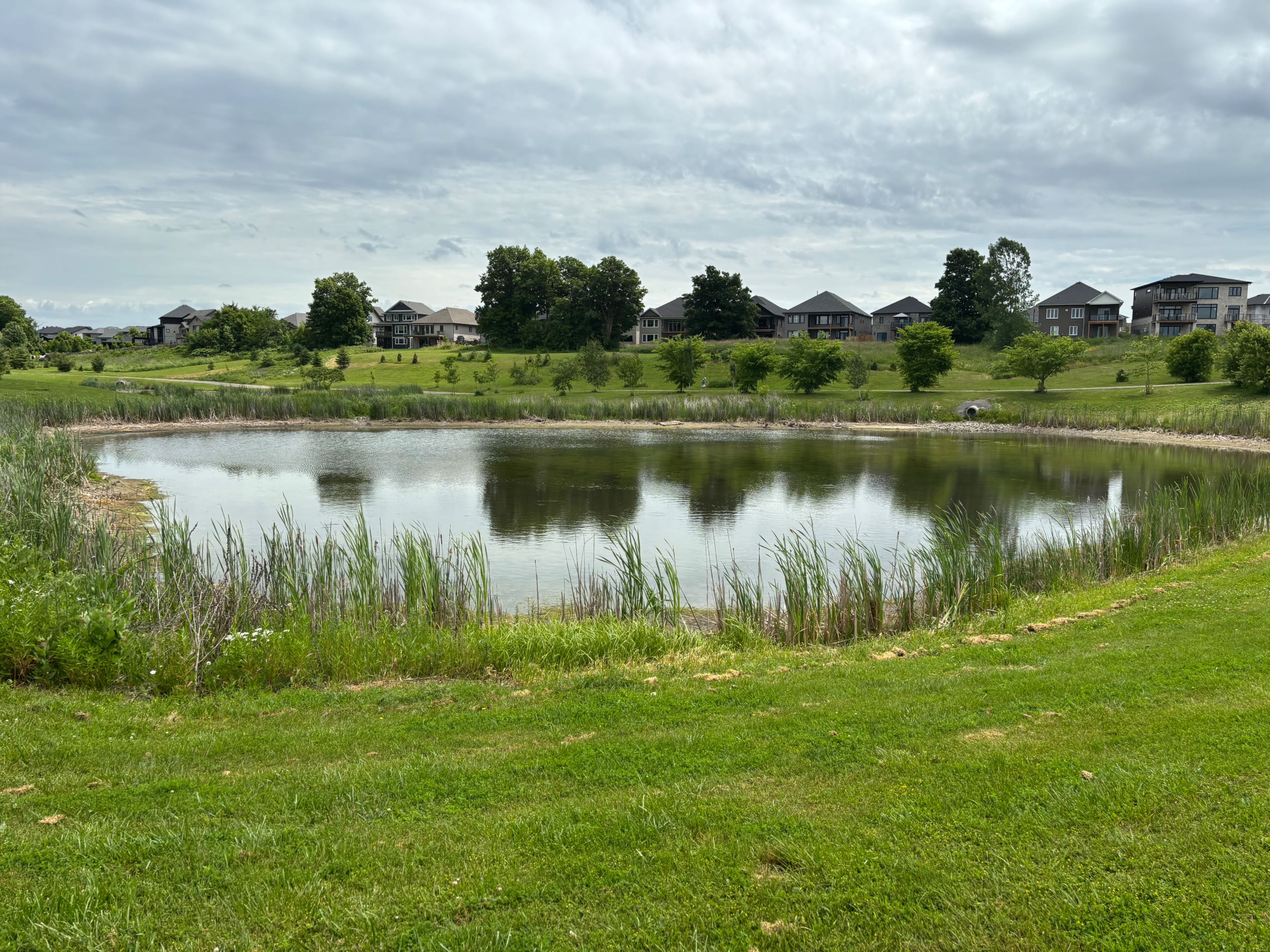
Stormwater management (SWM) ponds collect rainwater, melting snow, and runoff from everyday activities like washing cars or watering lawns. By holding and releasing water during storms, they reduce flooding and erosion while trapping pollutants such as dirt, oil, road salt, lawn chemicals, and pet waste before they reach streams and lakes.
Stormwater ponds are engineered infrastructure that manages water flow and improves water quality. While they are not natural wetlands or true habitat areas, they can support wildlife such as turtles, fish, birds, and frogs. During all maintenance work, we take careful steps to protect wildlife and the environment while keeping our water and community safe.
There are two main types of SWM ponds:
Why do we maintain stormwater ponds?
Stormwater management ponds need regular care to remove sediment, manage plants and keep structures in good condition. Proper upkeep helps prevent flooding, improve water quality, protect roads and pipes, and keep the pond working safely and effectively.
How do we maintain stormwater ponds?
What we do:
How do we decide which stormwater ponds need work?
In 2024, we developed a 10-year plan to take care of our stormwater management ponds. The plan looks at how much sediment has built up and the condition of each pond and its surroundings. Pond maintenance is prioritized based on things like flood risk, condition, location, and impact on the community.
Some maintenance, like checking the pond and managing plants, happens every season. Bigger work, like dredging or major repairs, is done when needed.
Dredging is the process of removing sediment, debris, and other materials that naturally build up in stormwater management ponds over time. This buildup can reduce the pond’s ability to hold water, increase the risk of flooding, and affect water quality.
Dredging is done carefully, following environmental rules to protect wildlife and the surrounding ecosystems.
Dredging helps:
We plan maintenance to avoid sensitive wildlife periods. Work is usually done outside bird nesting season (April–August), fish spawning times and turtle nesting periods (May–August). Exact timing varies depending on species present and regulatory requirements.
For your safety, please stay back from the water’s edge at stormwater management ponds. These ponds manage rainwater and snowmelt, and are not for recreation. Conditions in and around the ponds can change quickly and may be dangerous, including:
Water levels can rise and fall quickly after heavy rains or snowmelt, creating unpredictable hazards. Enjoy the pond from a safe distance.
What safety tips should I follow around stormwater ponds?
To help keep yourself, your family and pets safe:
Does the City post any signage at stormwater ponds?
We put signs like the one shown below at every entrance to stormwater ponds. These signs help keep people safe and explain the rules for the pond. 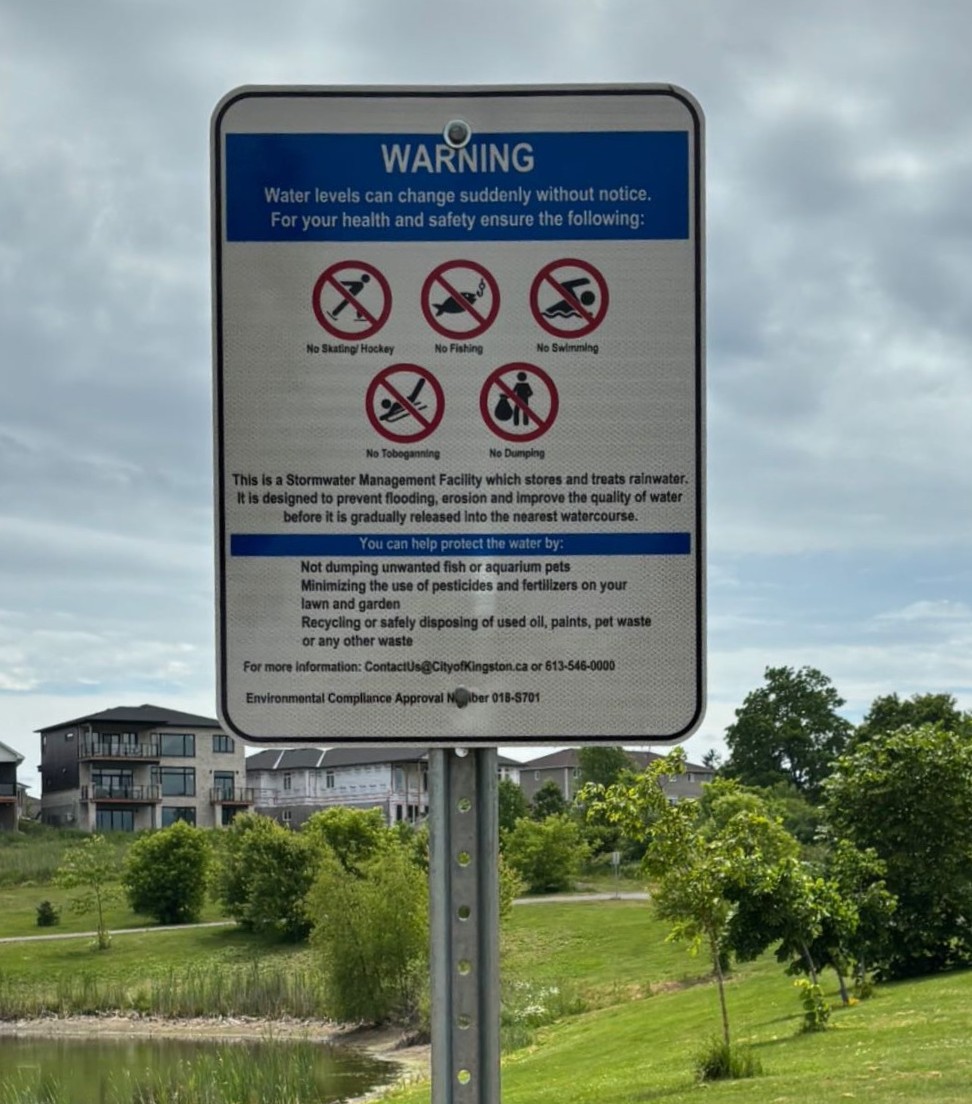
What can stormwater carry to our waterways?
Stormwater can pick up contaminants like oils, fuels, road salt, fertilizers, pesticides, litter and bacteria from roads, driveways and lawns. Stormwater management ponds help capture and treat some of these pollutants before they reach local streams and lakes, but they cannot remove everything.
Why does a stormwater pond sometimes smell bad?
Stormwater ponds can sometimes have natural odours because of:
Do stormwater ponds attract mosquitoes?
Ponds can attract mosquitoes, especially if the water is still. We manage mosquitoes by:
Find the locations of stormwater management ponds across the city using Open Data Kingston.
We care for stormwater ponds in ways that protect wildlife, habitat and the environment. Every dredging project follows strict rules and includes:
Residents can be confident that we balance effective stormwater management with responsible care for the environment.
What to expect during pond maintenance
Before dredging begins, ponds are fenced with temporary barriers to keep turtles, frogs, and other wildlife out of the work area. Qualified environmental professionals carefully move any wildlife already in the pond to a safe nearby habitat. This allows the pond to be safely drained and maintained without harming local species.
Who decides how and when wildlife is relocated?
Biologists and environmental specialists with the necessary permits handle wildlife relocation. The work follows provincial and federal rules, including the Ontario Endangered Species Act, the Migratory Birds Convention Act, and the Fisheries Act when fish are present.
What if species at risk are present?
If species at risk are present, we consult with the Ministry of the Environment, Conservation and Parks (MECP) and obtain any required permits or authorizations before starting work. Extra measures may include changing the work schedule, moving wildlife safely and restoring habitats after dredging. Work only begins after all approvals are in place.
How are fish protected during pond dredging?
If fish are in the pond, water is removed under a fish salvage plan. Qualified professionals safely capture and move the fish to nearby streams or lakes following the Fisheries Act.
What if birds are nesting in the pond area?
The majority of tree and plant clearing is done outside the main bird nesting season (April 1 to August 31). If small areas of trees or plants need clearing during bird nesting season, a biologist will visit the site and advise on how to protect birds and their nests. If they find an active nest, work stops until eggs hatch and young birds leave, following the Migratory Birds Convention Act.
All dredging and pond maintenance follow strict rules to protect wildlife, water quality and the community.
What agencies are involved in approving pond dredging?
Depending on the site, approvals may come from:
Can residents or private contractors dredge or alter a pond?
How does the City prevent harm to downstream streams or lakes?
During dredging, we use erosion and sediment controls to keep soil and debris from leaving the site. This includes silt fences, sediment curtains and stormwater treatment measures. Water quality is monitored throughout the work to meet environmental standards.
Are pesticides or harmful chemicals used during pond maintenance?
Dredging only removes sediment using machines. We do not use harmful chemicals. Sometimes invasive plants like phragmites may be removed using machines or safe, approved chemicals.
What happens to the removed sediment?
Sediment is tested according to Ontario Regulation 406/19: On-Site and Excess Soil Management. If it’s safe, it may be reused on site. Otherwise, it is taken to a licensed facility for proper disposal.
We notify nearby residents and businesses before the contractor arrives on site to start dredging work by delivering letters in surrounding neighbourhoods. The district councillor and Turtles Kingston are also informed in advance.
Residents may notice equipment and temporary noise. Work is scheduled to minimize disruption, and sediment and odours are carefully managed. Once complete, the pond will function more effectively.
How does the City restore the pond after dredging?
After dredging, the ponds are replanted with aquatic and shoreline vegetation, and habitat features are restored where possible. This helps stabilize the pond, support biodiversity, and provide natural cover for wildlife returning to the area.
| Pond ID and address | Maintenance | Year | Notes |
| Pond SWM-18 (1108 Centennial Drive) |
Dredging and repairs | 2026 | Includes restoration of eroded pond banks and outlet structure upgrades. |
In 2025, we completed a study on Pond SWM-18, located at 1108 Centennial Dr., following the 10-Year Prioritization Plan. The study looked at how well the pond manages stormwater by mapping the area with Geographic Information System (GIS) tools, measuring drainage areas and using computer models to see how water flows.
The study recommended upgrading the pond so it can hold stormwater for a full 24 hours. This will help it handle heavy rain more safely and reduce the risk of flooding.
Learn more about the laws, rules and programs that guide how we take care of stormwater ponds. These resources explain environmental protection, safe work practices, and how we protect wildlife and their habitats.
Contact
Engineering Services
engineering@cityofkingston.ca

The City of Kingston acknowledges that we are on the traditional homeland of the Anishinabek, Haudenosaunee, and the Huron-Wendat, and thanks these nations for their care and stewardship over this shared land.
Today, the City is committed to working with Indigenous peoples and all residents to pursue a united path of reconciliation.
Learn more about the City's reconciliation initiatives.


